
Hit by the third wave of the COVID-19 pandemic and soaring fuel prices, airlines are flying towards record losses with a likely loss of a whopping Rs 20,000 crore for the full fiscal year, warns a report. The airlines are flying towards their steepest-ever net loss of over Rs 20,000 crore this fiscal, which will be 44 per cent more than Rs 13,853 crore they bled last fiscal, Crisil said in a report. This will push back the industry's recovery beyond fiscal 2023, the report based on three large listed airlines--Indigo, Spicejet, and Air India--which together command 75 per cent of the domestic traffic, warned.

The wholesale price-based inflation rose to 2.03 per cent in January, 2021, even as food prices cooled. The WPI inflation was 1.22 per cent in December, 2020 and 3.52 per cent in January last year. While food articles saw softening in inflation in January, manufactured items witnessed hardening of prices, as per data released by the Commerce and Industry ministry.
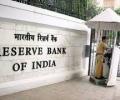
The declining inflation and a negative industrial outlook have strengthened the case for RBI.
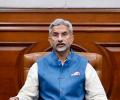
The Indian Army will not let China change the status quo along the Line of Actual Control (LAC) "unilaterally" and its current deployment along the frontier was not seen before, External Affairs Minister S Jaishankar said on Monday, rejecting Congress leader Rahul Gandhi's criticism of the government's handling of the border row.

According to the ManpowerGroup Employment Outlook survey released on Tuesday, that covered 5,131 employers across India, a net 19 per cent of employers are anticipating an actual rise in their staffing numbers, while 52 per cent expect no change and 28 per cent are not sure about adding to their existing staff strength.

Consumer stocks remain the biggest laggard on the bourses. The Nify50 weighting of FMCG stocks declined to a decade low of 9.9 per cent at the end of March this year, down 150 basis points from 11.4 per cent a year ago. At their peak in March 2013, major FMCG stocks, such as Hindustan Unilever, ITC, and Asian Paints, together accounted for 15 per cent of the Nifty50. But now together with automobile stocks, the consumer goods sector accounts for only 14.7 per cent of the index, down 200 basis points in the past 12 months and 37 per cent from the record high weighting of 23.4 per cent at the end of March 2014.

Moody's Investors Service on Thursday said India's rising vaccination rate, low interest rates and higher public spending drive the positive outlook for corporate sector.

'RBI is already late in addressing inflation pressures.'

The price of bitcoin, the bestselling cryptocurrency, has shrunk nearly three times this year to mark the fate of such digital assets. Crashing prices, regulatory uncertainty and taxes have put Indian crypto exchanges in troubled waters. Finance Minister Nirmala Sitharaman's budget for FY23 announced a 30 per cent tax on any income from the transfer of virtual digital assets.

'Investors need to have a fairly diversified basket of funds within equities.' 'We want them to allocate to largecap funds, midcap funds and flexicap schemes.'

MG Motor India is investing Rs 2,500 crore by the end of next year to increase the production capacity at its Halol plant in Gujarat, as it gears up to launch its mid-size SUV Astor, according to a top company official. Despite the worsening semiconductor shortage situation, which is likely to continue for at least another six months, the company expects its sales this year to grow by up to 100 per cent over last year. "We have done an investment of Rs 3,000 crore already, and by the end of next year, we will do another Rs 2,500 crore. "We will reach a total of Rs 5,500 crore," MG Motor India president and managing director Rajeev Chaba told PTI.

Amid China's economic slowdown, the country's economic challenges may increase manifold and its economy may be hit harder in the wake of the Ukraine-Russia crisis.

Rating agency Fitch on Tuesday slashed India's growth forecast for the next fiscal to 8.5 per cent from 10.3 per cent, citing sharply high energy prices on account of the Russia-Ukraine war. With the Omicron wave subsiding quickly, containment measures have been scaled back, setting the stage for a pick-up in GDP growth momentum in the June quarter this year, the agency said. It has revised upwards the GDP growth forecast for the current fiscal by 0.6 percentage points to 8.7 per cent.

After several years of downgrades to the country's medium-term growth outlook, the estimates are likely to be upgraded now, Credit Suisse said in a report. The country's economy is showing signs of bottoming out, it said. According to the report, the consensus forecasts of GDP growth for FY2022 over FY2020 stopped falling after October 2020 (currently at (-) 1 per cent). Analysts at Credit Suisse expect these estimates to be revised upwards.
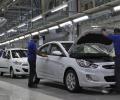
Domestic passenger vehicle retail sales declined eight per cent in February as the companies continued to suffer production loss due to chip shortage, automobile dealers' body FADA said on Friday. The passenger vehicle (PV) sales dropped to 2,38,096 units last month, down 7.84 per cent from 2,58,337 units in February 2021. "Even though the passenger vehicle (PV) segment saw some launches and slight respite in supply due to better production, it was not enough to meet customer demand. "Vehicle waiting period thus remains similar to what it was in the past few months," FADA president Vinkesh Gulati stated.

Moody's Investors Service, while silent on the sovereign rating on the higher-than-expected fiscal deficit numbers, expressed doubts over attaining the higher revenue targets and divestment realisation as assumed in the Budget. The Union Budget 2021-22 has pegged a fiscal deficit of 9.5 per cent for the current financial year as against the consensus 7 per cent, and 6.8 per cent for 2021-22 with a market borrowing of around Rs 12 lakh crore. It also assumes Rs 1.75 lakh crore to be scooped up from divestment.
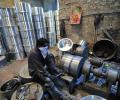
India's manufacturing sector activities gained further strength in November, and witnessed the strongest increase in production and sales since February on improving market conditions, a monthly survey said on Wednesday. The seasonally adjusted IHS Markit India Manufacturing Purchasing Managers' Index (PMI), increased from 55.9 in October to 57.6 in November, signalling the strongest improvement in the health of the sector in ten months. Moreover, the headline figure was well above its long-run average of 53.6.

When the sun rises in 2022, the Indian hospitality industry will be waking up with prayers for survival, desperately looking forward to some form of support from the government as revival from the impact of the coronavirus pandemic of the last two years will be an arduous journey. Just as the industry was beginning to see a flickering light at the end of a long tunnel towards the end of 2021, the spread of the Omicron variant of coronavirus and subsequent extension of suspension of scheduled international passenger flights till January 31, 2022, has come as a dampener to those who were looking to have some business in the winter season. With inbound tourist arrivals unlikely amidst the pandemic, the industry wants the government to incentivise domestic travels with income tax benefits for a limited period so as to help the hospitality and tourism sector get up again by tapping the pent up demand for holidays, within the country.

The sweeping economic sanctions on Russia - the second largest producer of crude oil - following its invasion of Ukraine late last month can cull global and domestic growth along with the added pains of higher inflation and currency depreciation, RBI Deputy Governor Michael Patra has said. And if the war lingers on, it can even lead to deglobalisation and even a recession, he added. The ongoing war has only added a whole new dimension to the outlook, and in fact, a weighty downside, Patra said in a lecture at the industry lobby IMC on Friday evening.
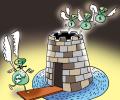
Foreign Direct Investment flows to India in 2021 were 26 per cent lower, mainly because large M&A deals recorded in 2020 were not repeated, the UN trade body has said.

The Indian Institute of Science, Bangalore and Indian Institute of Technology, Bombay were ranked among the Top 40 as per Times Higher Education BRICS and Emerging Economies Rankings 2015.

'India's manufacturing will take 10-15 years to catch up with China.'

'Mr Badal wanted to talk to a member of the Gandhi family to bring about some sort of rapprochement between the Akalis and the Congress which were the two major parties at that time.'

Tata Steel was the top gainer in the Sensex pack, climbing 2.11 per cent, followed by Infosys, HDFC Bank, HDFC, Kotak Bank, M&M and PowerGrid. NSE Nifty jumped 142.05 points to end at 17,605.85.
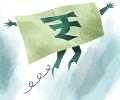
'If you look at the order books of capital equipment companies or money deployed on the ground, there is forward movement in terms of actual investment by the private sector.'
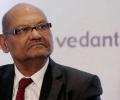
With a robust outlook for mineral-led growth in India, Anil Agarwal-led Vedanta Limited is looking to invest up to $20 billion across its businesses, which includes doubling of silver production and steel capacities. In a virtual press conference had last month, Agarwal said the company planned a capex of $5 billion over a period of three years. The company has not given a timeline for $20-billion investment.

The Reserve Bank of India on Friday raised the benchmark lending rate by 50 basis points to 5.40 per cent to tame inflation.
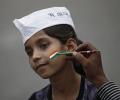
Current Account Deficit is projected at 1.2 per cent and 1 per cent of GDP in 2014-15 and 2015-16.

Infosys on Friday posted a 3.5 per cent rise in quarterly net profit, lagging analyst estimates.

'It is important that students not focus on the remuneration that the job fetches in the first year, but look at the next 5 year journey with that job role.'

Jhunjhunwala passed away early on Sunday morning due to a cardiac arrest, a source in his newly set up airline said.
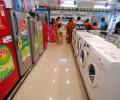
The industry is expecting double-digit growth on a year-on-year basis, helped by a possible price correction after softening of raw material inputs and factors such as positive sentiments, pent up demand and improving economic conditions. Besides, a shift in consumer behaviour from price consciousness towards technologically advanced premium products with quality, value proposition and safety aspects leading to a rise in demand for home automation products is making the industry upbeat. With the government's production linked incentive (PLI) scheme for white goods, which has witnessed a committed investment of Rs 4,614 crore, in place, many manufacturers are gearing up to make the most out of the opportunity as well as take steps towards reducing their dependency on imports and make products more affordable.

The root of the problem, according to industry officials, is the sudden stoppage of lines of credit to tea plantation companies.

'From our perspective, it will bring additional customers and from their perspective, it will get them younger customers.'

Former Arsenal manager and world governing body FIFA's current chief of global football development, Arsene Wenger will play a role in Indian football's grassroots programmes and talent development.

Poor governance and mediocre short-sighted politics are destroying the paradise that Goa was as its environment, water table, culture and way of life is drastically threatened by tourism and migration, points out Ramesh Menon.
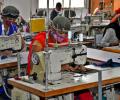
'The approach today is, instead of giving loans to 100 MSMEs, let us give one loan to a big-ticket corporate.' 'And so many of these big fish deceived the banks and the banks are in the doldrums now with high NPAs.'

The demand environment is expected to improve over the next three quarters, aided by a recovery in demand from the construction sector, following release of payments to contractors after elections.

'It's important that every portfolio is well diversified.' 'My own portfolio is diversified across asset classes: 50% is in equity funds, 15% in international schemes, 25% in debt funds and 10% in sovereign gold bonds.'

Kaushik Khona's second innings at GoAir will be more challenging than the first. Globally, the aviation industry is in deep distress because of the pandemic, reports Aneesh Phadnis.
